Treadmill incline and pace: does 1% match outdoor running?
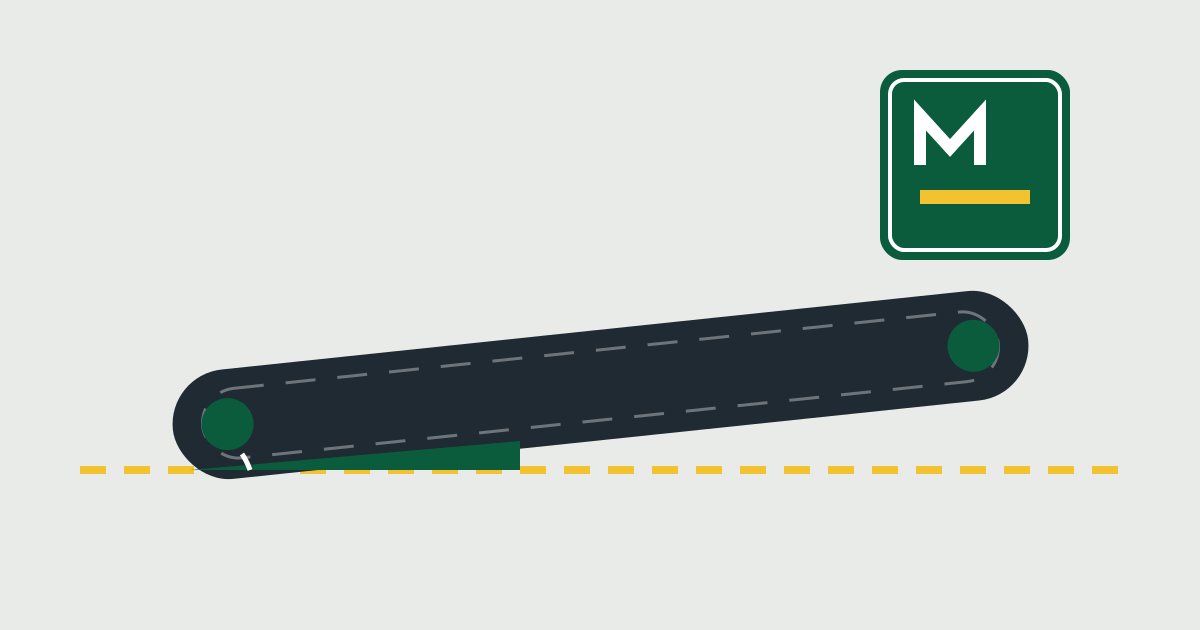
The 1% treadmill incline rule comes from a 1996 laboratory study. It found that a 1% grade matched the energy cost of road running at speeds from 9:11 to 5:22 per mile, in runs of about five minutes. The pace shown on the display does not change with incline.
Why a treadmill can feel easier
On a treadmill the belt moves under you and you run in still air. Outdoors you push through air, which costs extra energy. The researchers who measured this reported that running indoors on a treadmill costs less energy than running outdoors at the same velocity because of the lack of air resistance, and that a slight incline can make up for it.[1]
What the 1996 study measured
Jones and Doust compared the oxygen cost of running on a road with running on a treadmill at 0%, 1%, 2% and 3% grade. They tested speeds from 2.92 to 5.0 meters per second, which is 9:11 to 5:22 per mile, over runs of about five minutes.[1] The table converts the speeds named in the abstract to units runners use and summarizes the result at each.
| Speed (m/s) | km/h | mph | Per mile | Result compared with the road |
|---|---|---|---|---|
| 2.92 | 10.5 | 6.53 | 9:11 | Road running was not significantly different from 0% or 1%, and was lower than 2% and 3%. This row covers the two lowest speeds. |
| 3.75 | 13.5 | 8.39 | 7:09 | Road running differed from 0%, 2% and 3%, but not from 1%. |
| 4.17 | 15.0 | 9.33 | 6:26 | Road running was not significantly different from 1% or 2%, was higher than 0% and lower than 3%. |
| 4.58 | 16.5 | 10.25 | 5:51 | Same result as 4.17 m/s. |
| 5.00 | 18.0 | 11.18 | 5:22 | Road running fell between 1% and 2% and was not significantly different from any grade. |
The authors concluded that a 1% grade equalized the energy cost of treadmill and outdoor running across this range.[1]
What the study did not test
The rule is useful, but its limits matter.
- Slower paces. The range stops at 9:11 per mile. At the two lowest speeds a flat treadmill was not significantly different from the road, so a flat belt is a reasonable choice at easy paces.
- Faster paces. The range stops at 5:22 per mile. At the top speed the road result fell between 1% and 2%, so a single grade did not capture every speed exactly.
- Longer runs. The runs lasted about five minutes. The study did not test a long run.
- Other measures. The study measured energy cost. It did not measure how hard the run feels, heart rate or running mechanics.
This guide covers this study only. Treat 1% as a sensible default, not a rule that fits every runner and run.
How to use incline in practice
The pace on the display depends only on belt speed. A treadmill set to 6.0 mph is 10:00 per mile at 0% or at 1%. To convert a displayed speed to pace, use the mph to min/mile converter, or the speed to pace calculator if your display shows km/h. If you want your treadmill effort to resemble a road run in this speed range, a 1% incline is a reasonable setting. If your effort feels different from outdoors, adjust by feel and record both the speed and the incline.
Using treadmill pace for a race goal
Treadmill pace and race pace are not the same measure. To plan a race, turn your goal time into a pace with the 5K pace calculator or another race pace calculator, then find the matching treadmill speed in the pace chart.
Frequently asked questions
Does incline change my pace on the display?
No. The display shows belt speed, so 6.0 mph is 10:00 per mile at any incline. Incline changes the effort needed to hold that speed.
What incline matches outdoor running?
In a 1996 study, a 1% grade matched the energy cost of road running at speeds from 9:11 to 5:22 per mile over about five minutes. At the slowest speeds tested, a flat treadmill was not significantly different from the road.
Is a flat treadmill fine for easy runs?
At the two lowest speeds in the study, which started at 9:11 per mile, a flat treadmill was not significantly different from the road. The study did not test slower paces, so use effort as your guide.
Sources
Related tools and guides

About the author
Shaheer Bin Ramzan is a software engineer and SEO specialist with five years of professional experience. He builds and checks the calculators and writes the guides on MilePaceLab. He is not a running coach or doctor. See the author page, the methodology and the disclaimer. Report errors through the contact page.